
Last updated
What Does OSHA Require for Farm Workers?
If your crew does hand labor, whether that's picking, pruning or packing, OSHA 1928.110 sets the baseline: potable water, toilet facilities and a place to wash hands, all within a quarter mile of where people are working. That's built for row crops and orchards where people move across acreage all day, not a fixed job site. One facility per 20 employees is the ratio, so a 40-person picking crew needs at least two setups spaced so nobody's walking half a mile to use one. This is different from OSHA 1926.51(c), the construction ratio, which caps out at one toilet seat and one urinal per 50 workers once you hit 200 or more employees. Farms in Gainesville tend to spread crews out over open ground, so placement matters as much as the count. We help growers figure out how many stops a field needs and where to put them so the quarter-mile rule holds up if anyone ever checks. For a general gut check on numbers before you call us, our how many porta potties do I need guide walks through the math for row crop and livestock operations both.
Handwashing is its own line item under the same standard, and it's worth treating separately from the toilet count. A handwashing station rental or a simple portable sink rental satisfies that piece without you having to run water lines out to a field. If your operation applies pesticides or herbicides, OSHA 1926.51(f)(1) kicks in specifically for that work, requiring washing facilities for anyone handling those chemicals, separate from general field sanitation. Soap and a way to dry hands are part of that picture too, per 29 CFR 1910.141(d)(2), and hand sanitizer alone doesn't satisfy it. We've set up combination stops, toilet plus handwash, on spray crews west of Gainesville toward Newberry, about 19.4 miles out, where the closest fixed plumbing was a farmhouse a quarter mile off the field edge.
How Many Restrooms Does a Farm Need?
Crew size and how spread out your fields are drive the number more than acreage does. A tight 15-person packing operation might run fine on a single standard porta potty rental stationed by the shed. A row crop operation with pickers scattered across 80 acres needs multiple stops so nobody's off the quarter-mile mark. Livestock operations add a wrinkle: standing water and mud mean placement has to account for drainage and truck access for servicing. A standard unit holds 60 to 70 gallons and measures about 44 by 48 inches on the ground, small enough to tuck at a field edge without eating into planted rows.
For longer growing seasons, a monthly porta potty rental usually pencils out better than booking week to week, and our portable toilet rental options cover everything from a single unit through a multi-stop layout for larger operations. Some farms also run a packing house or processing area that generates wash water and grease, which is a different problem entirely; a grease trap pumping service handles that side if you're running any kind of food prep or cleaning operation on site. For farms further out, we cover ground toward Alachua, 15.3 miles northwest, and out past Raleigh, 23.2 miles southwest, so distance from town isn't usually the limiting factor on service.
Why Do Agricultural Sites Need Different Placement Than Construction Sites?
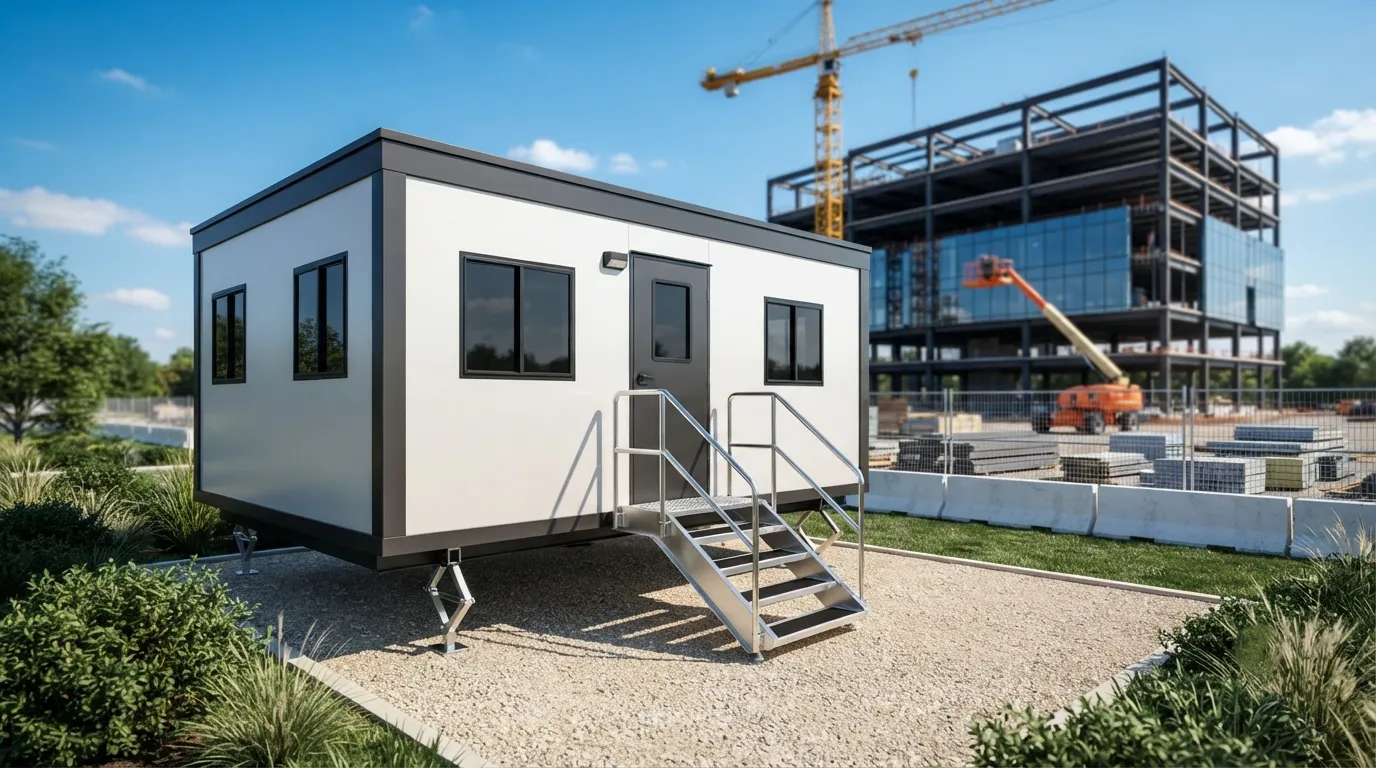
Fields don't have fixed crews standing in one spot the way a construction site does, so unit placement has to follow where people actually work, not just where a truck can park closest to the road. A porta potty placement guide matters more here than almost anywhere else we service, since ground stability, drainage, and truck access for weekly pumping all factor into where a unit can actually sit for a season. We also handle septic pumping service for farmhouses and packing facilities running on their own tanks, and a typical residential-size septic tank gets pumped every 3 to 5 years depending on household size and tank capacity. If your operation runs a bunkhouse or seasonal housing for workers, that's worth checking separately from the field units. Some larger operations also lease a storage container rental for equipment and supplies alongside the restroom setup, which we can coordinate on the same delivery run.
How often do porta potties get serviced on a farm?
The baseline is one visit a week for up to 10 users over a standard 40-hour week, per ANSI/PSAI Z4.3, the portable sanitation industry standard. Larger crews or hot, high-use stretches during harvest often need twice-weekly service, which we schedule around your picking calendar.
Can you place units on uneven or muddy field ground?
Yes, but we look at the ground first. Units need stable footing to stay upright and to make weekly pumping trucks accessible. We'll walk the site or ask for photos before delivery to pick a spot that holds up through a full season.
Do farm restrooms need to be ADA accessible?
It depends on who's using them. If the public or non-employee visitors access the site, ADA Standards 213.2 requires at least 5 percent of clustered units, and never fewer than one, to be accessible. Ask us and we'll check what applies to your setup.
What's the cost difference between a single unit and a multi-stop layout?
A single standard unit runs $100 to $350 a day. Multi-stop layouts price out per unit plus delivery, so a five-stop field layout costs more up front but often beats moving one unit across acreage repeatedly. Our porta potty rental cost page breaks down the variables.
How far will Gainesville Porta Pros travel for a rural farm site?
We service Gainesville and the surrounding growing region, including farms toward Williston, 23.7 miles south, and Starke, 26.8 miles northeast. Call ahead on distant sites so we can plan delivery and weekly service routes accordingly.
Next step
Get a delivery date
Tell us the address, the dates and the headcount. We size the order and confirm the route.