Last updated
How many restrooms does a county fair need?
Start with your busiest single hour, not your daily total. A fair drawing 3,000 people on a Saturday afternoon needs a different count than the same 3,000 spread over a slow weekday. Gainesville Porta Pros works backward from projected peak attendance and spaces units near gates, the food court and the grandstand rather than clustering them in one corner of the lot. Under OSHA 1926.51(c), the construction-crew ratio runs one toilet per 20 workers, but a fairground crowd behaves differently, with heavy spikes right after events let out. We lean on our own placement experience and the guidance in our how many porta potties do I need breakdown rather than a flat per-person number, because line length depends as much on layout as on headcount. Every cluster we place includes at least one accessible unit, consistent with ADA Standards section 213.2, which calls for 5 percent of clustered single-user units to be accessible, never fewer than one. Mix matters too. A run of standard portable toilets near the midway, a few deluxe flushable units near the grandstand, and a restroom trailer near the entrance covers the range of expectations a fair crowd brings, from kids on the rides to guests dressed up for a Saturday night concert. If your event runs multiple days, ask about a monthly porta potty rental rate versus booking day by day, since fair runs often land in an odd middle ground between a single-day event and a full seasonal rental.
What restroom options work best for a Gainesville fair?
Trailers handle VIP and grandstand traffic; standard units handle the midway and parking fields. A 4 stall restroom trailer or 8 stall restroom trailer gives you climate control and real sinks for sponsor tents or a beer garden, while a long row of standard units near the animal barns and vendor rows moves the bulk of daily foot traffic without a wait. Each standard unit carries a 60 to 70 gallon holding tank and stands about 92 inches tall on a 44 by 48 inch footprint, small enough to tuck between vendor booths without eating up walkway width. For guests who want a nicer experience without the full trailer, a deluxe flushable porta potty splits the difference. Placement still has to respect ADA Standards section 403.5.1, which calls for a 36 inch clear route to each accessible unit, and the door itself needs a 32 inch clear opening under section 404.2.3. We also plan for a 60 inch turning circle at accessible units per section 304.3.1, which matters most on packed fairground gravel or grass. If your fair includes agricultural exhibits or 4-H barns, our farm and agricultural restrooms page covers handwashing near livestock areas, and a handwashing station rental or portable sink rental belongs near any food vendor row regardless of what else you book.
Why does restroom placement matter for a Gainesville fairground?
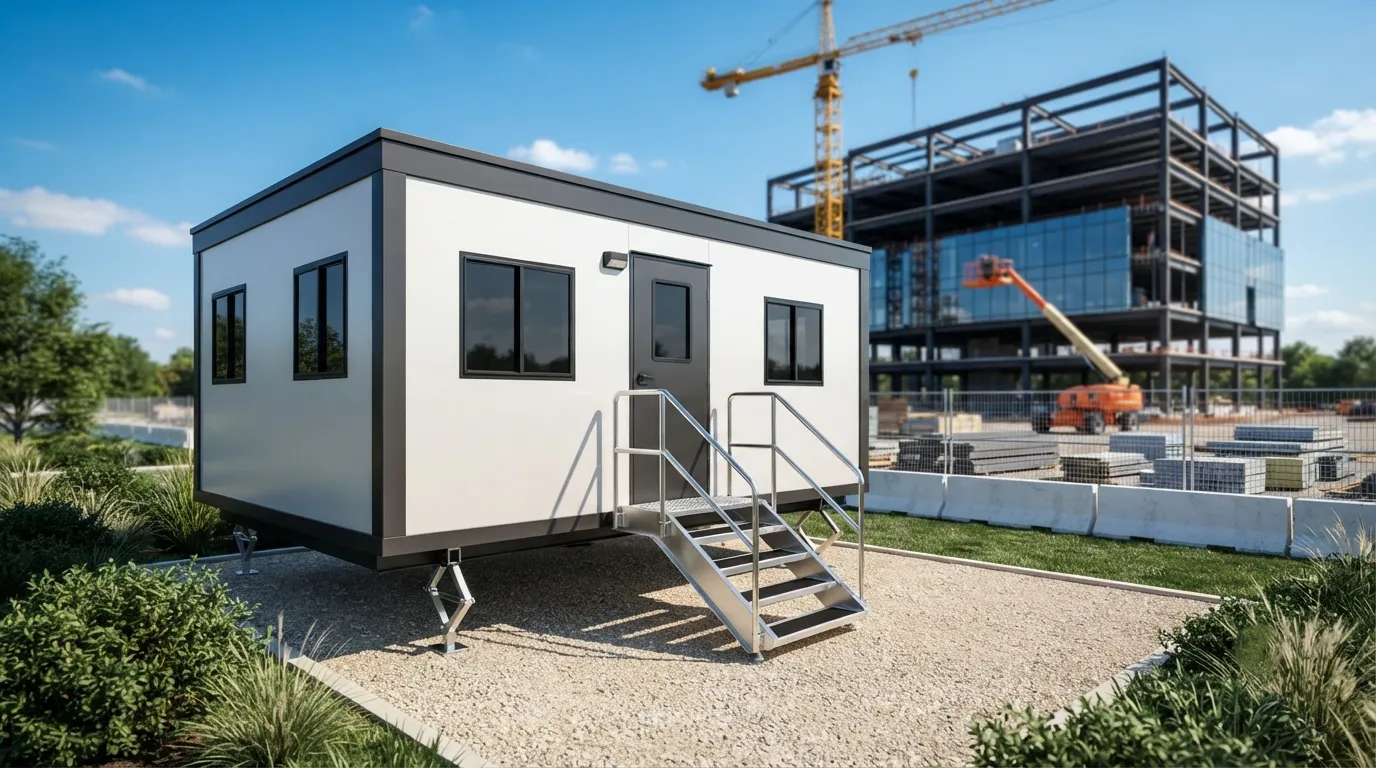
Bad placement creates lines even when the total unit count is right. Units bunched at one gate while the grandstand sits empty means half your guests wait twenty minutes while the other half walk past open doors. Our porta potty placement guide walks through spacing units along natural walking paths, near light poles for evening visibility, and clear of generator cords and tent stakes. A light tower rental near restroom clusters keeps evening crowds from stumbling over guy-wires, and if your fair runs power through a rented temporary power pole, keep both far enough from restroom paths to leave the required clearance. Gainesville fairground layouts often include grass and gravel mixed, so we check that ground surfaces meet the stable, firm, slip-resistant standard in ADA Standards section 302.1 before locking in a spot. If your fair uses temporary fencing to route crowd flow, we coordinate unit placement with the fence line so accessible routes never get boxed in by a barrier. For big multi-night runs, a roll-off dumpster near the vendor area keeps trash from piling up around restroom clusters, which matters both for smell and for keeping walkways clear.
How much does a county fair restroom rental cost in Gainesville?
Pricing depends on unit mix and rental length. A standard unit typically runs $200 to $400 for an event-length rental, while a restroom trailer for an event can run $2,499 to $3,899. See our full porta potty rental cost page for a duration-by-duration breakdown.
Do fairs need ADA-accessible restrooms?
Yes. Clustered single-user units require at least 5 percent accessible, never fewer than one, per ADA Standards section 213.2. Our ADA accessible porta potty units meet the clearance and turning-space specs for fairground crowds of any size.
Can Gainesville Porta Pros service a multi-day fair?
Yes. We schedule servicing around your event hours so units get pumped and restocked before gates open. Ask about combining a septic pumping service visit for any onsite holding tank with your daily restroom servicing.
What about handwashing near food vendors?
Food booths need dedicated handwashing separate from restroom units. A hand sanitizer station rental supplements but does not replace soap-and-water handwashing under 29 CFR 1910.141(d)(2).
How far in advance should we book?
Book as early as your date is set, especially for trailers, since fair-season demand runs high. Use request a quote to lock in unit counts before another Gainesville event books the same weekend.
Next step
Get a delivery date
Tell us the address, the dates and the headcount. We size the order and confirm the route.