Last updated
How Many Porta Potties Do I Need for a Construction Site?
OSHA 1926.51(c) sets the baseline: 1 toilet seat for 20 workers or fewer, and once you cross 20, it's 1 toilet seat and 1 urinal per 40 workers, dropping to 1 per 50 once you hit 200 workers on site. A 15-person framing crew needs 1 unit. A 45-person site crosses into the 40-worker bracket and needs 2 fixtures. Most crews round up rather than split hairs on the math, and that's the right call, because a queue at 7am costs more in lost labor than a second standard porta potty rental ever will. If your project has a hard deadline and inspectors on site, check the OSHA portable toilet requirements page before you order, since site layout and worker count both shift the count. For agricultural crews doing hand labor, OSHA 1928.110 sets a different rule: one facility per 20 employees, and it has to sit within a quarter mile walk of where people are working. That matters for farm work outside Gainesville proper, where crews spread across acreage rather than a fixed pad. See farm and agricultural restrooms for how that plays out on a real layout.
| Workers on site | OSHA minimum |
|---|---|
| 1 to 20 | 1 toilet seat |
| 20 to 199 | 1 toilet seat + 1 urinal per 40 workers |
| 200 or more | 1 toilet seat + 1 urinal per 50 workers |
How Many Porta Potties Do I Need for an Event?
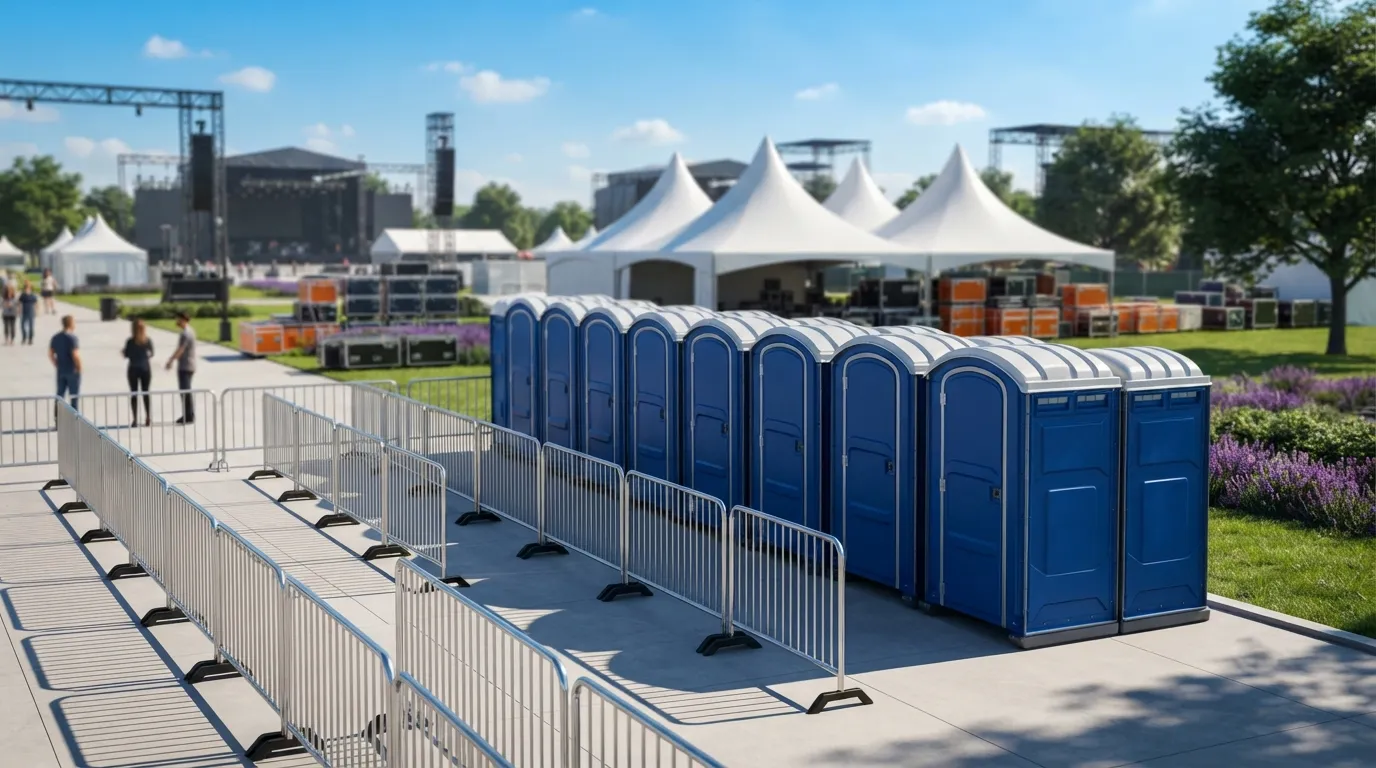
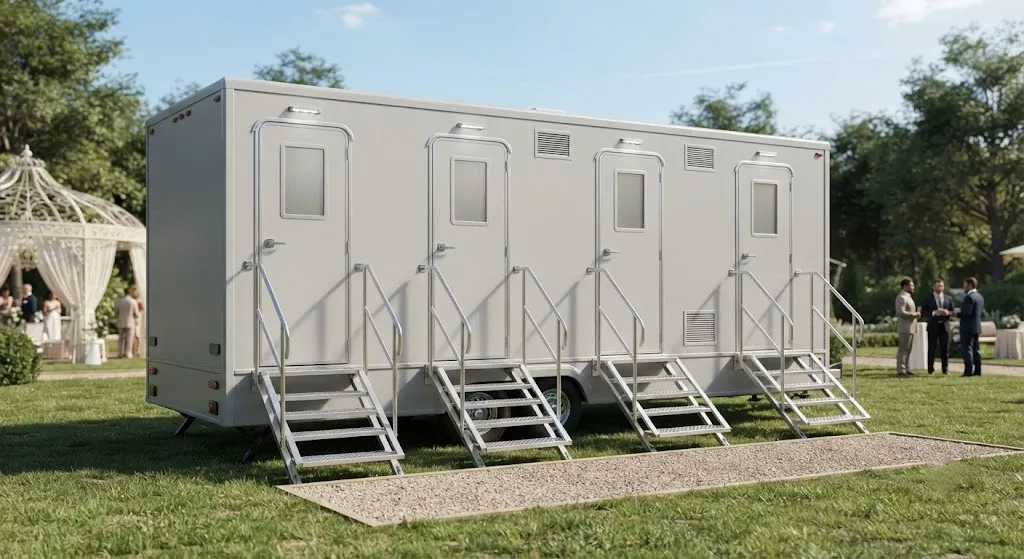
Events run on guest count and hours, not a labor code. A 200-guest wedding running 4 hours needs 2 to 3 standard units, plus at least one ADA accessible porta potty since ADA Standards section 213.2 requires 5 percent of a cluster be accessible, with a minimum of one no matter how small the group. Push the same 200 guests to a 6-hour reception with an open bar and you're adding a unit, because alcohol moves the math faster than time does. A rough rule that holds up across most Gainesville bookings: 1 unit per 50 guests for the first 4 hours, then add 1 unit for every 2 additional hours if drinks are served. For weddings specifically, see wedding restroom rental, and for anything with a beer tent or full bar, budget the deluxe flushable porta potty line since guests notice the difference at a seated event.
| Guests | Event length | Units needed |
|---|---|---|
| 50 | 4 hours | 1 |
| 150 | 4 hours | 2 to 3 |
| 300 | 4 hours | 4 to 5 |
| 300 | 8 hours + alcohol | 6 to 7 |
What Changes the Count for Multi-Day Events?
Multi-day events don't just multiply the daily number, because servicing frequency matters as much as headcount. ANSI/PSAI Z4.3 sets the industry baseline at one service visit per week for up to 10 users across a 40-hour week, so a 3-day festival with 500 daily attendees needs a servicing plan, not just more units parked on the lot. A county fair running Friday through Sunday should plan for daily pumping on the busiest units, and the county fair restrooms page walks through how that scales against a fairground layout. Festivals and concerts add another wrinkle: crowd density near a stage means you want restrooms staged at two or three points, not one bank at the entrance. Check festival restroom rental and concert restroom rental for placement patterns that hold up over a full weekend. A marathon adds a different variable entirely, since runners are spread over a course rather than clustered, and marathon and race restrooms covers spacing along a route rather than a single site count.
How Do I Count Fixtures for Handwashing?
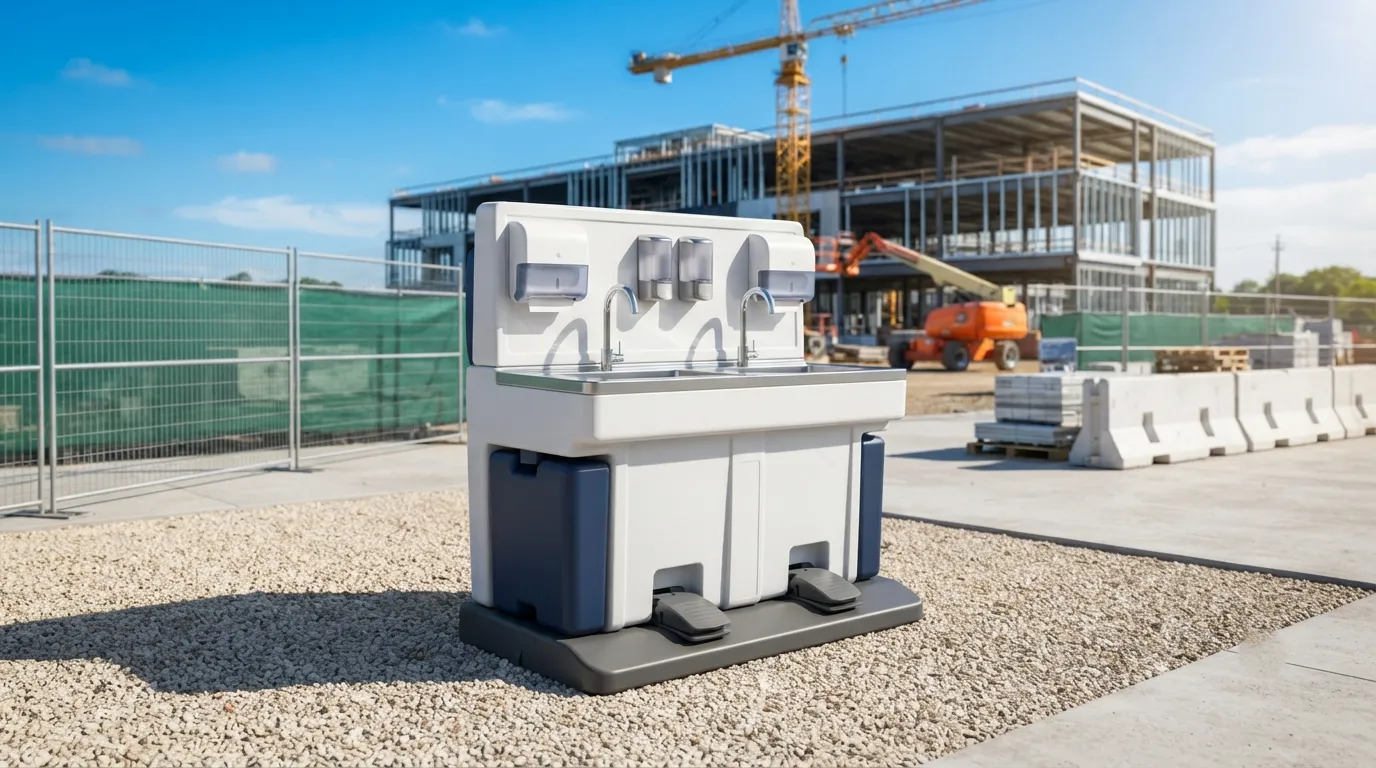
Toilets and handwashing are two separate counts, and OSHA treats them that way. 29 CFR 1910.141(d)(2) requires soap and towels or a hand-drying device at washing stations, not sanitizer alone, so a bank of hand sanitizer stations doesn't satisfy that requirement on its own. If your crew is spraying paint, coatings, herbicides or insecticides, OSHA 1926.51(f)(1) kicks in specifically for those contaminant tasks and requires washing facilities beyond general sanitation. A standard site plan pairs one handwashing station rental per 2 to 3 toilets, though heavy food-handling events often run a dedicated portable sink rental near any food truck or concession stand. Full requirements are laid out on handwashing station requirements if you're building a compliance packet for a Gainesville jobsite inspection.
How Many Cubic Feet and Tons Does a Dumpster Hold?
Dumpster sizing runs on cubic feet and weight, and the two don't scale the same way. A 10 yard dumpster runs about 12 feet long and holds roughly 270 cubic feet, which answers how many cubic feet in a 10 yard dumpster, good for a single-room renovation. A 20 yard dumpster runs about how many feet is a 20 yard dumpster people ask, and the answer is close to 22 feet long, holds around 540 cubic feet (a common answer to how many cubic feet in a 20 yard dumpster), and carries roughly 2 to 3 tons of debris depending on material, which is the typical answer to how many tons does a 20 yard dumpster hold. A 30 yard dumpster holds close to 810 cubic feet and answers how many tons can a 30 yard dumpster hold with roughly 3 to 4 tons, while a 40 yard dumpster tops out near 1,080 cubic feet and answers how many tons does a 40 yard dumpster hold with roughly 4 to 5 tons on a typical construction load. Heavier material like concrete or shingles fills the weight limit long before it fills the box, so tonnage matters more than volume on demolition jobs. Full breakdowns by project type sit on dumpster sizes and dimensions, and weight caps by hauler are covered on dumpster weight limits. If you're pairing a dumpster with a restroom order for the same jobsite, construction site services bundles both under one delivery window.
How Much Space Does Delivery and Placement Need?
Placement drives the count as much as headcount does. Each standard porta potty rental unit runs about 44 by 48 inches on the ground and stands roughly 92 inches tall, so a bank of 4 units needs real clearance, not a tight corner behind a dumpster. ADA Standards section 403.5.1 requires 36 inches of clear route width to reach an accessible unit, and section 405.2 caps any ramp at a 1:12 slope, both of which matter if your Gainesville site has grade changes near the entrance. A roll-off delivery truck needs about 60 feet of straight clearance behind the vehicle to place a dumpster safely, so tight urban lots sometimes need a placement scout before delivery day. If your event sits on turf or gravel rather than pavement, mention it when you request a quote so the driver brings the right equipment.
Where Should Units Go on a Construction Site or Event Lot?
Placement isn't just about clearance, it's about walk distance and sightlines. OSHA 1928.110 sets a quarter mile walking limit for agricultural field sanitation, and while that number is specific to farm labor, it's a useful rule of thumb anywhere workers are spread across a large Gainesville site: if a unit is more than a few minutes' walk away, people skip it or lose work time getting there. Event planners should keep units visible from the main gathering point without crowding the stage or food area. OSHA 1926.56(a) also governs minimum lighting levels for construction areas, which matters if your restrooms sit near a night shift or an evening event, and OSHA 1926.202 requires any barricades near a placement zone to meet ANSI D6.1. For a full walk-through of good and bad placement choices, see the porta potty placement guide, and if timing is tight, emergency porta potty rental covers rush delivery options.
FAQ
How many porta potties do I need for 100 guests?
For 100 guests at a 4-hour event, plan on 2 standard units plus 1 accessible unit under ADA Standards 213.2. Push the event past 4 hours or add a bar and you'll want a third unit. Gainesville caterers usually confirm headcount a week out, which is the right time to lock your order.
How many porta potties do I need for a 50-person construction crew?
A 50-person crew crosses the 20-worker threshold in OSHA 1926.51(c), landing in the bracket requiring 1 toilet seat and 1 urinal per 40 workers. That works out to 2 fixtures minimum for 50 workers, plus a handwashing station under 29 CFR 1910.141(d)(2).
Does alcohol change how many portable toilets I need?
Yes. Alcohol increases bathroom trips and shortens the interval between them, so add roughly one extra unit for every 2 hours of open bar service beyond a standard 4-hour event. A dry event of the same size can run leaner.
How many tons does a 30 yard dumpster hold?
A 30 yard dumpster typically holds 3 to 4 tons, though dense material like concrete or roofing shingles fills the weight cap well before the box is full. Check dumpster weight limits before loading heavy debris.
How far in advance should I book portable toilets in Gainesville?
Book standard events at least a week out and construction accounts as soon as you have a start date, since weekend and event-season demand in Gainesville fills fast. Emergency same-day delivery is available through emergency porta potty rental when timing is tight.
Do I need a permit to place a porta potty on a Gainesville sidewalk or right of way?
Placement in the public right of way needs confirming with the city before delivery day. Check porta potty permit requirements and confirm with Gainesville's permitting office directly rather than assuming a standard yard placement rule applies.
Next step
Get a delivery date
Tell us the address, the dates and the headcount. We size the order and confirm the route.