Last updated
Where should a porta potty go on site?
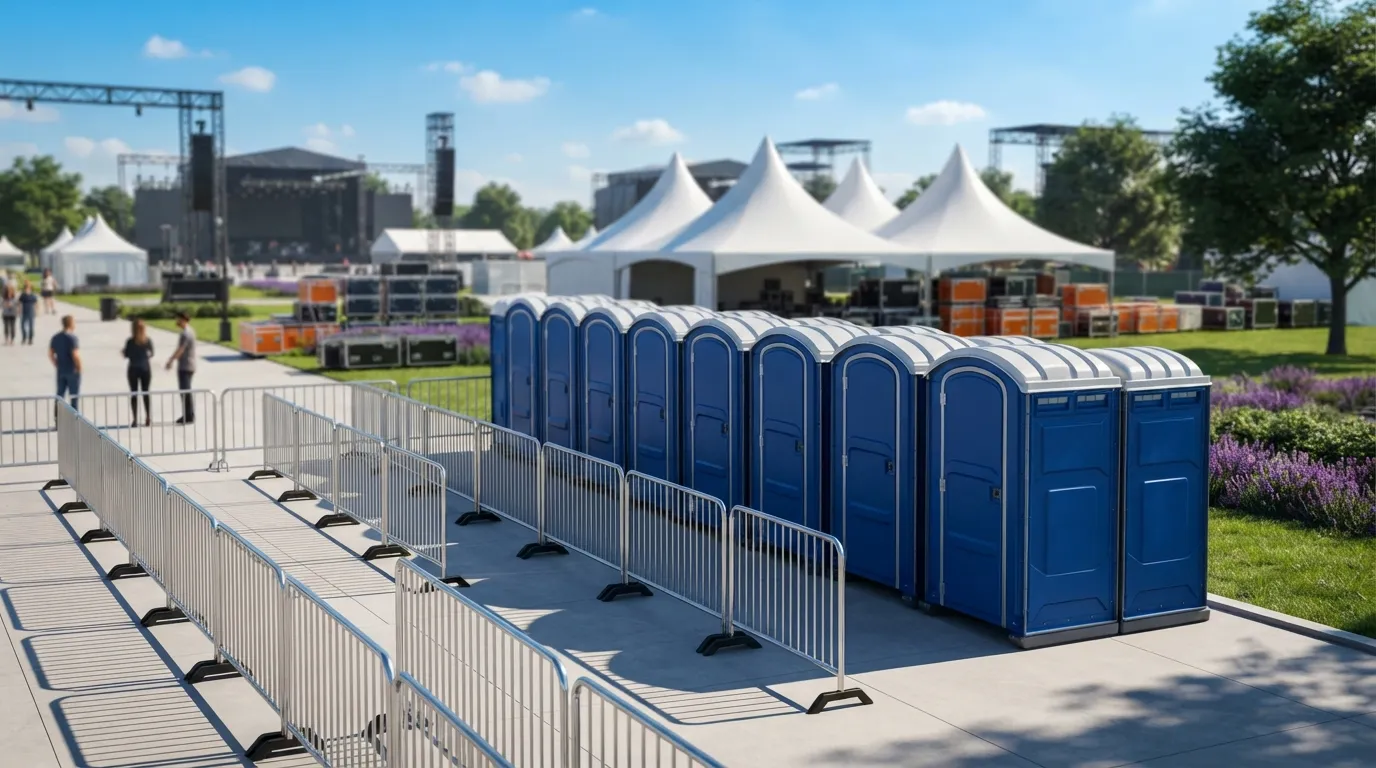
Pick flat, stable ground first. ADA Standards section 302.1 calls for surfaces that are stable, firm and slip resistant, and that standard is a good baseline even for a unit nobody's flagged as accessible yet. A standard unit runs about 44 by 48 inches on the ground and stands roughly 92 inches tall, so give it more room than that footprint suggests, especially near doorways or tents at an event restroom rental in Gainesville. Keep it off soft turf that will rut once the service truck rolls up. Avoid slopes, low spots that pool water, and anywhere near a building's fresh-air intake. For construction sites, match placement to worker density using OSHA portable toilet requirements, and check our how many porta potties do I need guide before you commit to a single unit. If you're placing near an ADA-designated station, ADA Standards section 304.3.1 requires a 60 inch turning circle in front of the unit, and section 403.5.1 calls for a 36 inch clear path to reach it.
Do I need a permit to place a porta potty or a dumpster?
Sometimes, and it depends on whether the unit sits on private property or touches the public right of way. Placement in the right of way needs confirming with the City of Gainesville before delivery, since we're not going to guess at an ordinance number here. That question comes up constantly with dumpster placement permit cost too. If you're planning a roll-off dumpster rental, review dumpster permit requirements alongside our general porta potty permit requirements page, because porta potty placement rules and dumpster rules often get checked by the same city desk. A roll-off delivery needs about 60 feet of straight clearance behind the truck, which matters as much for permitting as it does for physical access. When in doubt, call the city before the truck leaves our yard, not after.
How much clearance does delivery actually need?
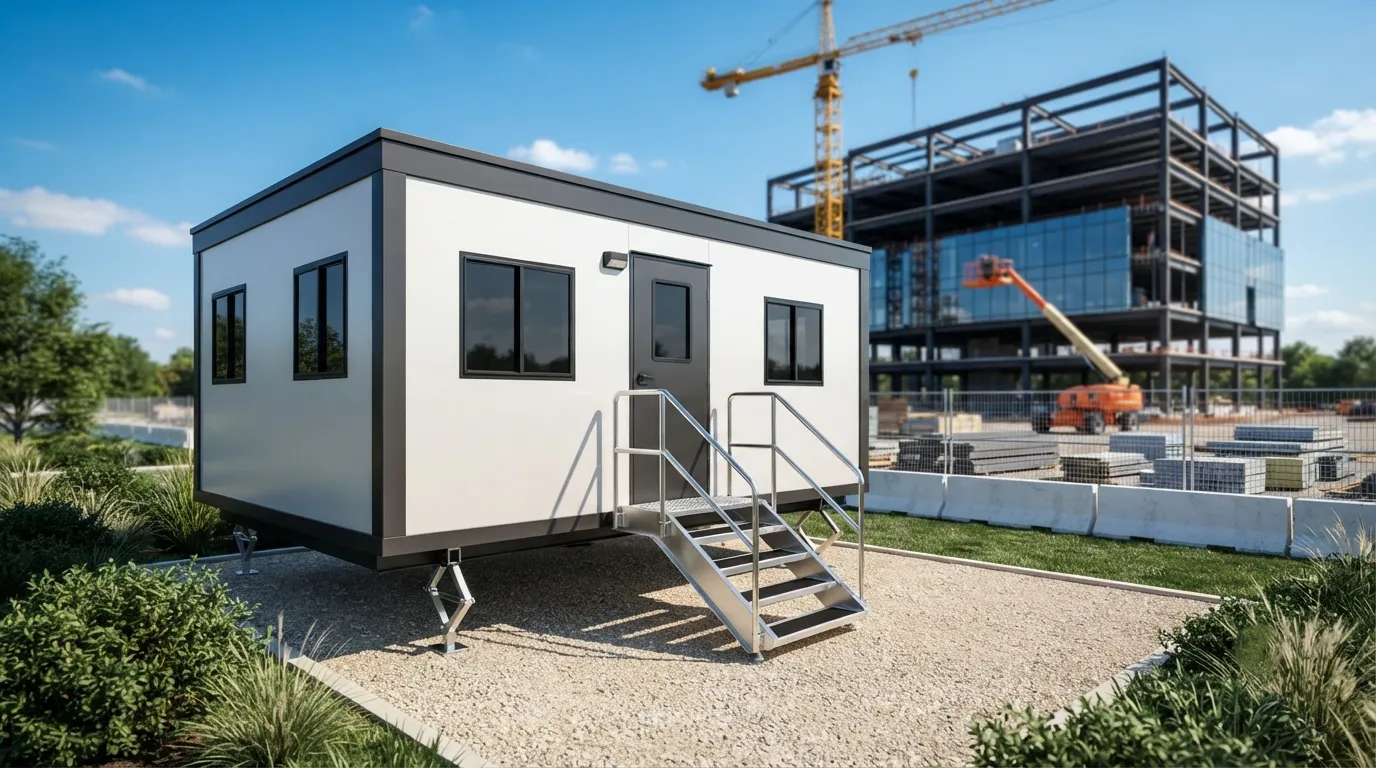
Enough for the truck to back straight in, drop the unit, and pull out without a three-point turn in the street. That 60 foot clearance figure applies to roll-off dumpster and larger container drops, and it is the number our drivers ask about most on quotes for storage container rental or a 20ft storage container in Gainesville. Overhead lines and low branches matter just as much as ground clearance. For a restroom trailer rental, factor in trailer length plus turning room, since an 8 stall restroom trailer needs considerably more maneuvering space than a single standard porta potty rental unit. If a driveway is tight, tell us before delivery day. We would rather reroute the truck than damage a curb or a customer's mobile office trailer replacement doors, which happens more often than people expect when a container gets wedged too close to an existing structure.
Why does placement affect service and pricing?
Because a hard-to-reach unit costs more to service, and that shows up in the invoice. A standard rental in Gainesville runs in the range below, but placement that blocks the service truck can add a trip charge on top.
| unit | duration | typical price |
|---|---|---|
| standard | day | $150 |
| standard | week | $200 |
| standard | month | $200 |
| ada | week | $185 |
| dumpster | week | $600 |
Good placement also protects the pump schedule. ANSI/PSAI Z4.3 sets a baseline of one service visit per week for up to 10 users over a 40 hour week, and a unit tucked behind a fence or parked on soft ground can turn a five-minute pump into a delay for the whole route. That same logic applies off-site: a Placerville septic pumping service or any septic outfit will tell you the same thing about tank access, and it holds true for a septic pumping service call here in Gainesville. A typical residential septic tank gets pumped every 3 to 5 years depending on tank size and household size, and clear access saves both time and the service fee. If you're weighing a handwashing station for a crew site, our handwashing station rental page covers footprint too, and replacement parts for an Ozark River portable sink are worth asking about if an existing unit's pump or faucet needs swapping rather than replacing the whole basin.
How far should a porta potty sit from a food or serving area?
Give it real separation, both for smell and for foot traffic flow. There is no fixed distance in the FACT BANK, so use judgment: keep it downwind, away from seating, and on a path guests can find without crossing a work zone. For weddings, check wedding restroom rental for layout tips.
Can a porta potty go on gravel or dirt?
Yes, as long as the surface is stable and doesn't shift under weight. Compacted gravel works well. Loose sand or soft mud after rain does not, since the unit can tip or sink, and that becomes a bigger problem the longer the rental runs, per our porta potty rental checklist.
Do I need an accessible unit on site?
If units are clustered, ADA Standards section 213.2 requires at least 5 percent to be accessible, with a minimum of one. See ADA accessible porta potty for specs and ADA restroom requirements for the full standard.
How many units do I need for a construction crew?
OSHA 1926.51(c) sets one toilet for 20 workers or fewer, scaling up from there. Check construction site services or OSHA portable toilet requirements for the full table before ordering.
What if my site has no flat ground?
We'll walk it with you and find the best compromise, sometimes shifting the unit a few feet from where you first planned. A porta potty rental checklist helps you spot problem spots before delivery day, especially on farm sites; see farm and agricultural restrooms for that context.
Next step
Get a delivery date
Tell us the address, the dates and the headcount. We size the order and confirm the route.